
Weitong Composite Leads with Cutting-Edge Woven Roving Technology
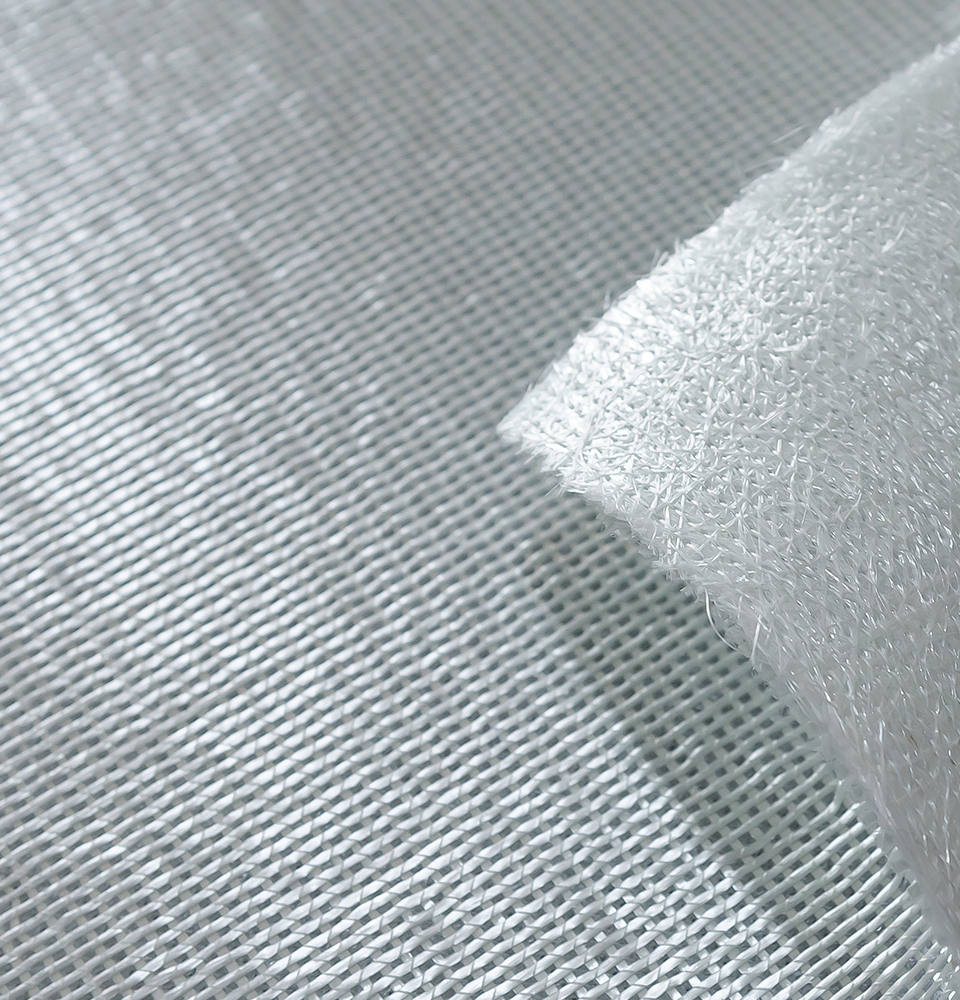
Fiberglass core mat is a specialized reinforcement material used in composite manufacturing. It is mainly used to increase laminate thickness, improve stiffness, and enhance resin flow without adding excessive weight. Unlike conventional fiberglass mat, fiberglass core mat combines a synthetic non-woven core with fiberglass reinforcement layers to form a lightweight three-dimensional structure, making it suitable for a wide range of FRP and composite applications.
Fiberglass core mat consists of a synthetic non-woven core sandwiched between fiberglass layers. Depending on the product structure, the reinforcement layers can include chopped glass fibers, multiaxial fabric, or woven roving. This sandwich structure increases material volume and thickness while allowing resin to penetrate the material effectively.
The core also has a certain degree of resilience and compressibility, allowing it to adapt to different product thicknesses and complex shapes. Fiberglass core mat is generally compatible with common resin systems such as polyester, vinyl ester, and epoxy.
One of the main applications of fiberglass core mat is the manufacturing of FRP composite products. It can increase composite thickness and improve stiffness while maintaining a relatively lightweight structure.
It is particularly suitable for composite components that require a balance of thickness, mechanical performance, weight, and production efficiency.
Marine applications are one of the most established fields for fiberglass core mat. In the construction of hulls, decks, and interior structures, fiberglass core mat offers a favorable strength-to-weight ratio, helping maintain structural performance while reducing overall weight and potentially improving vessel performance and fuel efficiency.
In automotive and transportation applications, reducing weight while maintaining structural performance is important. Fiberglass core mat can be used in composite panels and other molded components to increase thickness and stiffness while reducing the need for large amounts of high-density reinforcement materials.
In the construction sector, fiberglass core mat can be used in building panels, roofing components, and structural reinforcement. Its thermal and acoustic insulation properties can provide practical benefits in both commercial and residential buildings.
Water park slides, recreational facilities, bathtubs, shower enclosures, and other FRP products are typical applications for fiberglass core mat. These products often require complex curved shapes, and the flexibility of fiberglass core mat allows it to conform to different molds while providing basic strength and durability.
When used in composite panels, fiberglass core mat can help manufacturers achieve more uniform thickness and improved structural stiffness. The core increases material volume while maintaining good resin permeability, making it suitable for molded composite panels and similar products.
Fiberglass core mat is particularly suitable for composite manufacturing processes such as Resin Transfer Molding (RTM) and vacuum forming. The permeable synthetic core facilitates resin flow and helps resin impregnate the entire laminate more evenly.
It can also be used in injection molding and other composite molding processes.
1. Good stiffness-to-weight ratio: The sandwich structure helps improve the stiffness and strength of composite products while adding relatively little weight, making it suitable for applications where weight is an important consideration.
2. Good impact resistance: The core can distribute loads and stresses to a certain extent, helping improve the impact resistance and durability of composite materials.
3. Fast resin wet-out: The synthetic core has good permeability, allowing resin to penetrate the reinforcement relatively quickly. This can help shorten curing cycles and improve production efficiency.
4. Good forming adaptability: The material has good flexibility and can conform to molds with relatively complex shapes. It is suitable for manufacturing irregularly shaped components and can reduce the need for splicing.
No chemical binders: The core mat itself does not contain chemical binders, which helps minimize interference with resin wet-out of the reinforcement materials.
Fiberglass core mat can be widely used in FRP boats, automotive components, and aerospace-related composite components, among other applications. Its sandwich structure combines fiberglass reinforcement layers with a lightweight synthetic core, helping increase material thickness and improve stiffness while maintaining good resin flow.
For composite manufacturers, the appropriate core mat structure, thickness, and reinforcement combination should be selected according to the product's weight, strength, thickness, and molding process requirements to achieve a balanced combination of overall performance.