
Weitong Composite Leads with Cutting-Edge Woven Roving Technology
Multiaxial fabric is a high-performance composite reinforcement made primarily from fiberglass, commonly used in industries that require strong, lightweight, and dimensionally stable materials. Unlike traditional woven fabrics, multiaxial fabrics are engineered by layering fibers in multiple directions, enabling excellent tensile properties, balanced strength, and reliable performance under complex loading conditions. This makes them a preferred material in wind energy, marine engineering, transportation, and advanced structural applications.
Multiaxial fiberglass fabric is produced by arranging continuous rovings into multiple layers oriented at 0°, +45°, −45°, and 90°, depending on structural requirements. These layers are then secured using a light stitching technique instead of weaving. Because the fibers remain straight and non-crimped, the fabric maintains maximum fiber efficiency and outstanding load-bearing performance.
The use of stitched non-crimp construction helps enhance resin flow during vacuum infusion and RTM processes, resulting in laminates with fewer voids and improved mechanical consistency. Depending on the application, manufacturers may combine biaxial, triaxial, or quadraxial layers and even add a chopped strand mat layer to enhance bonding or surface finish.
The strength of multiaxial fiberglass fabric comes from its optimized fiber orientation and non-crimp architecture. Straight fiber alignment provides superior tensile and flexural properties, making the laminate strong yet lightweight. The multi-angle construction helps distribute loads across the laminate, offering much better fatigue resistance than conventional woven fabrics.
Because the fibers do not bend around each other as in woven cloth, the laminate maintains consistent stiffness and dimensional stability. This characteristic is especially important for large structural parts such as wind turbine blades and marine hulls, where long-term durability and predictable performance are essential. The efficient resin penetration also results in improved bonding between layers, enhancing the final composite’s impact strength and overall structural integrity.
Multiaxial fabrics vary based on the number and orientation of layers:
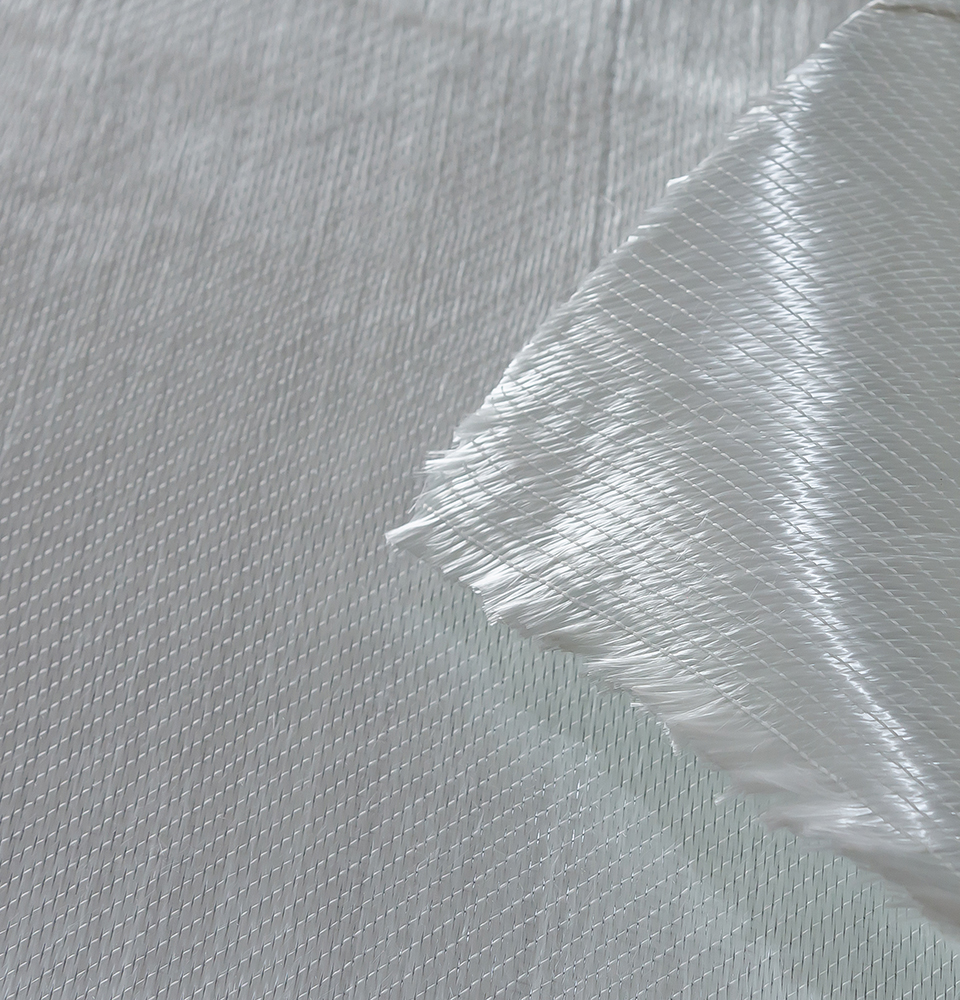
A biaxial configuration provides balanced reinforcement for general structural uses and is commonly used in boat hulls, panels, and industrial components.
Offering strength in three directions, triaxial fabrics are ideal for resin infusion applications and parts that experience multi-directional loads, such as automotive and wind energy components.
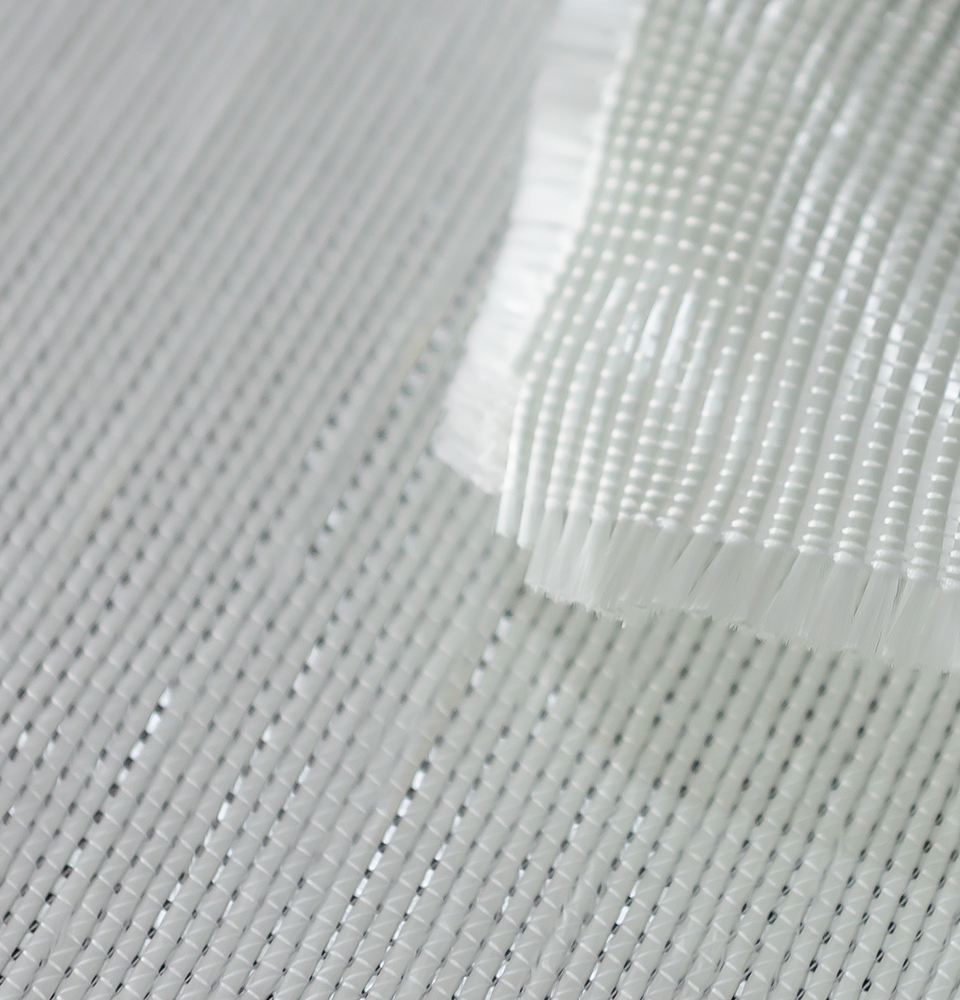
This type provides maximum strength and stability. Quadraxial fabrics are often chosen for advanced composites requiring enhanced rigidity and load distribution.
Adding a thin chopped strand mat improves resin absorption and interlaminar bonding, making this configuration useful for parts that require enhanced surface quality.
These configurations allow engineers to design laminates with precise strength characteristics and predictable mechanical behavior.
While both are used in composite engineering, multiaxial and unidirectional fabrics serve different purposes.
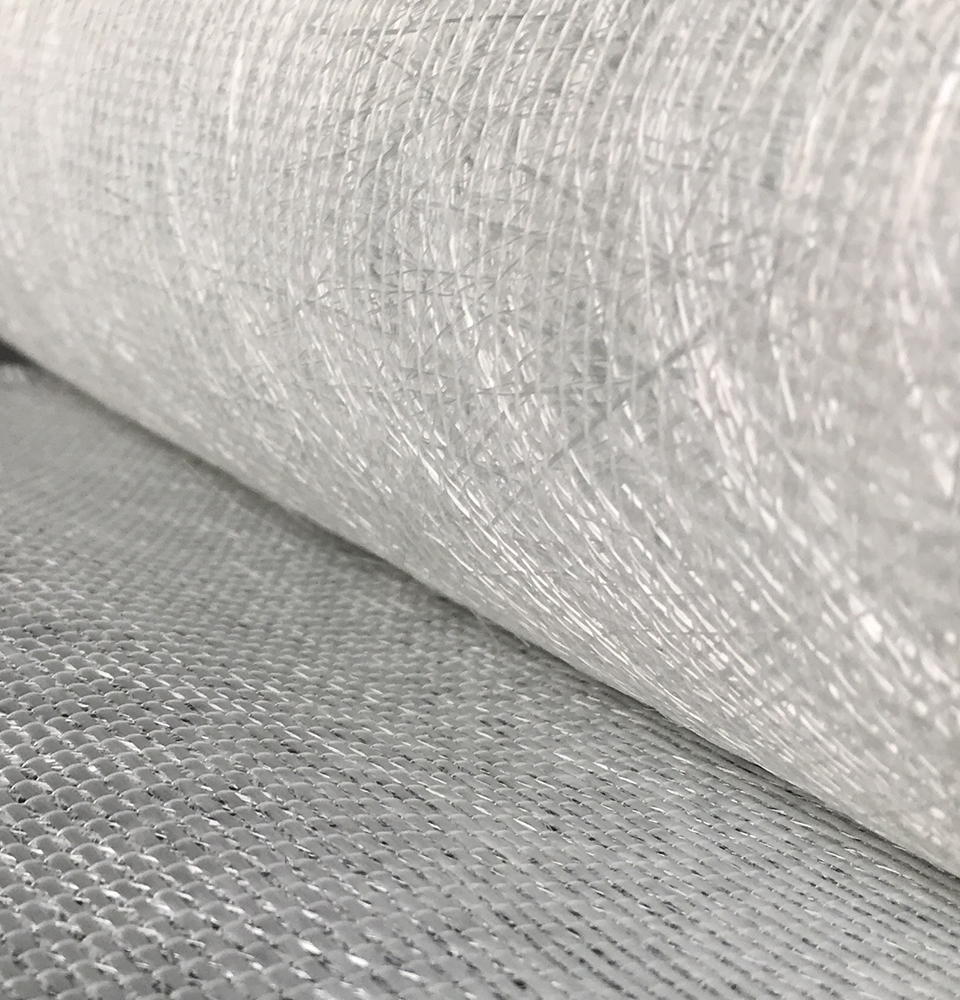
Unidirectional (UD) fabric contains fibers running primarily in a single direction, typically at 0°. This design maximizes axial strength but offers limited performance in off-axis directions. UD fabrics are widely used when the load is expected to act mainly along one axis.
Multiaxial fabric, by contrast, provides strength in multiple orientations. The inclusion of ±45° and 90° layers offers better shear performance, increased stability, and improved resistance against twisting or bending. This multi-angle structure makes it ideal for structural components that face complex stress patterns.
In short, UD materials are perfect for directional strength, while multiaxial fabrics offer balanced, multi-directional reinforcement needed for modern composite structures.
Because of their outstanding strength-to-weight ratio, excellent fatigue resistance, and stability, multiaxial fiberglass fabrics are widely used in high-performance composite manufacturing. They are commonly applied in:
1. Wind turbine blades due to their consistent stiffness and resin infusion compatibility
2. Marine and boat building, including hulls, decks, and structural reinforcements
3. Automotive components, such as body panels, structural beams, and crash-resistant parts
4. Aerospace interior parts, where weight reduction and durability are essential
5. Sports equipment, including surfboards, bicycles, and protective gear
6. Construction profiles, such as pultruded beams, gratings, and infrastructure reinforcements
Their reliable performance and compatibility with vacuum infusion and RTM processes make multiaxial fabrics a core material in many advanced composite applications.